This guide explains Mulhenua in a practical, decision-focused way, from how people typically describe its role to how buyers approach sourcing and quality checks. Objectively, “Mulhenua” is used as a label in different contexts, and its meaning can vary by community or supplier. The article also outlines requirements, evaluation steps, and FAQs.

Mulhenua is a name you may encounter when browsing niche products, local offerings, or supplier catalogs—and the very important step for buyers is to clarify what it specifically refers to in that seller’s context before committing. Because “Mulhenua” can function as a label rather than a single universally standardized item, due diligence around composition, intended use, origin, and documentation is essential. This guide provides an industry-style framework for understanding Mulhenua, evaluating quality signals, and approaching sourcing decisions with measured expectations.
In practice, buyers often assume a label means one fixed specification. However, with terms like Mulhenua, the right approach is to treat the supplier’s product sheet as the authoritative description, then verify the details through consistent evidence—especially when you are planning repeat procurement or advising customers. The goal is not to “figure out what Mulhenua means” from the name alone, but to confirm what the delivered product actually is, how it performs, how it’s handled, and how reliably it can be reproduced for future orders.
“Mulhenua” may appear on packaging, product titles, or supplier listings. Yet without standardized definitions across all markets, two listings using the same word can still represent different formulations, grades, processing methods, or intended applications. Therefore, the objective starting point is not the name itself, but the product’s measurable characteristics: what it is, what it contains (or how it’s processed), how it should be used, and what documentation accompanies it.
From an expert procurement perspective, the label is a gateway—not a specification. When you treat it that way, your purchasing process becomes more reliable and defensible. It also helps you avoid common pitfalls such as ordering the “right word” instead of the “right product,” scaling prematurely before validating performance, or accepting vague documentation that cannot be traced to specific lots.
In procurement and product sourcing, professionals follow a consistent evaluation hierarchy. Even when the product category is unfamiliar, the method stays the same. The priority is to eliminate ambiguity early so that technical and commercial decisions rest on verifiable information.
Professionals often follow an evidence ladder that goes roughly from identity to performance to controllability. Mulhenua fits into this approach because the word may be used differently by sellers. The professional response is to standardize the way you evaluate each listing, regardless of how the seller describes it. That standardization reduces subjective interpretation and creates a repeatable internal process.
In procurement and product sourcing, professionals follow a consistent evaluation hierarchy:
Mulhenua fits into this model because the word may be used differently by sellers. The professional response is to treat each listing as its own defined product package of meaning—one that must be confirmed using a standard checklist.
Even if you have pricing information in mind, professionals typically gather technical clarity first, because price differences can reflect different content, grade, or processing. Before requesting a quote for Mulhenua, ask for the information needed to resolve ambiguity. This isn’t bureaucracy; it’s a risk-reduction step that prevents costly returns, production disruptions, customer complaints, and regulatory headaches later.
Think of your initial questions as “identity and usability questions.” They help you confirm you’re ordering something that meets your operational definition of “Mulhenua,” not just something that shares a name.
Before requesting a quote for Mulhenua, ask for:
This is the quickest way to avoid mismatches—such as ordering Mulhenua for a use case where the delivered item is only loosely related to your needs. In many practical sourcing scenarios, the supplier may be willing to answer these questions quickly once you explain you’re seeking specification alignment. If they refuse, delay, or provide only generic marketing answers, that is itself a risk signal.
To make your supplier conversation efficient, you can structure your request as a “specification confirmation packet,” including a technical sheet, storage guidance, lot traceability description, and relevant quality testing or compliance statements. When you receive such a packet, you can store it internally and tie it to future reorders.
Because the term Mulhenua can refer to different categories depending on the supplier, the very objective pricing guidance is not a single fixed number, but a way to interpret quotes. When you receive price information, compare on a like-for-like basis. This prevents the common mistake of choosing the lowest unit cost for a product that has different composition, performance, or documentation quality.
When evaluating quotes, professionals typically calculate value using a “total cost of ownership” mindset rather than a “unit price only” mindset. For Mulhenua, documentation quality, shelf-life, packaging, and handling constraints all influence total cost. For example, a product with shorter shelf-life may require faster turnover and more frequent ordering. Temperature-sensitive products may require special shipping or receiving processes, which add overhead and reduce operational flexibility.
When you receive price information, compare on a like-for-like basis:
Where reliable pricing is published or can be substantiated by official retail records, those sources should be used. However, many niche labels do not have widely comparable public prices. In those cases, supplier quotes are necessary but should be treated as conditional on the documented specification. Your internal policy should treat “Mulhenua” quotes as “tentative pending spec confirmation.”
To further improve cost comparisons, request a quote that explicitly states:
Without those details, the cheapest price can quickly become the most expensive due to rework, spoilage, downtime, and disputes.
Supplier evaluation is not about trust-by-name; it is about proof-by-process. A credible supplier should be able to explain how they receive inputs, how they store and process items, and what controls they use to prevent substitutions. Even if you are buying for a one-time experiment, supplier process maturity affects whether your product will be consistent and whether the supplier will cooperate if something goes wrong.
A useful mindset is to ask: “If we reorder next month, will we get the same thing?” That question forces the supplier to address their controls and traceability. Another effective framing is: “What evidence do you provide for that consistency?”—which again moves the conversation from marketing to documentation.
When assessing supplier details for Mulhenua, look for:
For buyers near transport hubs or regional markets—where deliveries may move through multiple handoffs—these checks become even more important. Mulhenua listings with vague “origin” wording should be treated cautiously. Origin language such as “locally sourced,” “from farms,” or “from approved suppliers” is not the same as traceability. If origin matters for your customers, you need lot-level or at least batch-level traceability evidence.
It can also help to request information about:
These operational details are often what determine whether your customer experience is stable over time.
While “Mulhenua” can be used in varying contexts, buyer intent usually clusters into three patterns. Each pattern influences what documentation is most critical and what level of testing is reasonable.
Buyer decisions generally fall into:
In all three cases, clarity in documentation protects both quality outcomes and commercial expectations. Sampling without specification verification often leads to misleading “trial results,” because the trial product may not represent what you’d receive in a bulk order.
To operationalize these patterns, buyers can tailor their evaluation depth:
In many locales, names can carry cultural meaning or shorthand for an ingredient, a preparation style, or a traditional association. When Mulhenua is presented by regional sellers, the word may act as a locally recognized label rather than an internationally harmonized specification. For buyers serving diverse customers, it is helpful to confirm how the seller describes the product’s identity—especially if you plan to present the item in storefront materials, menu language, or product descriptions.
If the context is tied to a nearby community marketplace, it is common to see informal, story-oriented explanations alongside more formal documentation. The top professional approach is to respect the cultural framing while still anchoring purchasing decisions in technical details. This ensures that what you sell matches what you can verify, and it helps you avoid miscommunication with customers who interpret the label literally.
For example, if Mulhenua is described as a “traditional blend,” buyers should request:
If the seller cannot provide this information, you can still proceed for certain low-risk use cases, but you should reduce your claims and set expectations accordingly. Conversely, if the seller provides a robust technical description, you can confidently maintain consistent customer-facing messaging and repeat procurement.
Localization can also affect regulatory needs. If you are selling to customers in a regulated region, the local cultural meaning may not satisfy labeling requirements. Buyers should ensure that the seller can provide compliance-friendly documentation that maps the traditional label to standardized descriptors required in that jurisdiction.
The section below supplements the main narrative with a practical decision structure. It compares common supplier-provided elements, summarizes typical sourcing evidence, and outlines a step-by-step approach. Use it like a worksheet during supplier onboarding, quote comparisons, and repeat ordering.
| Evaluation Area (Mulhenua) | What a Supplier May Provide | Why It Matters for Buyers | Conditions / Requirements |
|---|---|---|---|
| Product Definition | Exact item name, category, grade, and usage notes | Prevents mismatch between label and specification | Must match your intended application; ask for the full item sheet |
| Composition / Technical Parameters | Ingredient list or material/process specifications | Enables like-for-like comparison across suppliers | Should be documented; batch details preferred |
| Origin and Traceability | Source region and lot tracking method | Supports consistency and reduces substitution risk | Request lot numbers and handling notes |
| Quality Testing | Testing references, internal QC checks, or third-party results (if applicable) | Reduces variability and supports compliance decisions | Documentation should be current and relevant to the delivered batch |
| Pricing Basis | Unit price, quantity tiers, and cost inclusions (shipping, packing) | Lets you compare total value accurately | Compare on identical unit basis and specification |
| Storage & Shelf-life | Recommended storage conditions and shelf-life statement | Protects product performance and customer satisfaction | Confirm compatibility with your storage environment |
| Lead Time & Availability | Estimated production/shipping timelines and reorder reliability | Reduces downtime and stockouts | Ask about batch availability windows for repeat orders |
Step-by-step procurement guide (recommended workflow):
Conditions / requirements to keep in mind:
When buyers need objective grounding—such as for product quality assurance concepts—consult widely recognized standards and institutional guidance. For general approaches to quality management and traceability practices, readers can reference the ISO standards framework (not specific to Mulhenua) and industry guidance from recognized regulatory or standards bodies relevant to the product category.
For claims involving food, cosmetics, or regulated consumables, buyers should consult their local regulator’s official requirements and guidance documents. For general sourcing and quality control principles, the World Health Organization (WHO) and International Organization for Standardization (ISO) are commonly cited reference points in quality and safety discussions.
Note: Since “Mulhenua” can represent different product types across suppliers, the exact applicable regulatory source depends on what Mulhenua refers to in your case. The objective action is to match the product category to the correct authority guidance. In practice, this means you identify what Mulhenua is (category), then you check which regulatory or standards regime applies (region + category), and then you request documentation accordingly.
Because buyers often ask, “What standard should we cite in procurement?” the pragmatic answer is: cite standards relevant to the product’s risk profile and intended use. If the product is a regulated consumable, you may need evidence of compliance with relevant labeling rules, contamination limits, or safety testing expectations. If the product is a non-food material with a performance requirement, you may still need technical testing evidence to support consistent performance.
Mulhenua is commonly used as a label or product name in certain catalogs and offerings. In practice, its meaning can vary by supplier and context, so the very reliable approach is to confirm the specific product category and specification sheet associated with the listing. In procurement terms, treat “Mulhenua” as an identifier until the specification evidence proves what it is.
Not necessarily. Because the term can be used differently, buyers should assume it is not standardized until documentation confirms the same grade, formulation, or processing method across suppliers. If you want to compare two suppliers, you must compare their documented parameters, not their marketing names.
Compare on like-for-like terms: unit basis, specification/grade, inclusion of logistics, batch traceability, and shelf-life. If these differ, the price is not directly comparable. A disciplined comparison should include receiving conditions and any operational requirements that may affect your internal costs.
Look for lot tracking, consistent storage/handling procedures, documented quality checks, and clear lead-time reliability. These factors support batch-to-batch predictability for Mulhenua. For repeat orders, ask how they ensure that future production matches the specification and technical sheet version you approved.
Request the item’s technical sheet, storage conditions, shelf-life or usability guidance, lot/batch information practices, and any quality testing records or compliance statements relevant to the product category. Also request the “document-to-lot linkage,” meaning how the documents correspond to the shipped lot numbers.
Packaging descriptions may be helpful, but professional sourcing typically requires a technical sheet and batch-linked information—especially when the name Mulhenua is used as a label with potentially variable content. Packaging is useful for receiving verification; it should not be your only evidence source.
These depend on what Mulhenua specifically refers to. Always confirm storage conditions and handling requirements in the supplier’s documentation before receiving or warehousing the product. If the product is sensitive to humidity, temperature, or light, ask about transit packaging requirements and whether conditions were monitored.
Place a small initial order, define acceptance criteria in advance (condition on arrival, match to documentation, usability), and document results for future sourcing decisions. If possible, include a simple performance check that you can repeat later—so you can verify that future lots behave similarly.
Mulhenua may be encountered as a distinctive label in supplier catalogs, local retail offerings, or niche product ranges. For buyers, the objective path is consistent: treat the name as an identifier, then validate the specification with documentation, traceability, and quality evidence. When you structure sourcing around measurable requirements—rather than relying on the word alone—you reduce risk, improve consistency, and strengthen repeat purchasing decisions.
Ultimately, the best procurement outcomes come from clarity. If the supplier can provide clear specification evidence, lot traceability, and handling guidance, buyers can approach Mulhenua with confidence and scale responsibly. If the supplier cannot, buyers should proceed cautiously—limit volume, reduce claims, and use sampling and documented acceptance criteria until the meaning of “Mulhenua” is fully verified in your specific purchasing context.
Striking the Perfect Balance: Navigating Premiums and Out-of-Pocket Expenses in Senior Insurance Plans

Explore the Tranquil Bliss of Idyllic Rural Retreats

How to Make Lasting Memories at Disneyland Attractions

4rkojvsx Technology: Industry Insights and Buying Guide

Affordable Phones and Plans for Seniors

Affordable Full Mouth Dental Implants Near You

Unlock the Top Kept Secrets to Finding Your Ideal Dentist for Flawless Dental Implant Results!

Discovering Springdale Estates

Unveiling RS Sul Telecom Services


Understanding Contact Number Leads and Supplier Verification
This guide explains how to evaluate potential suppliers and confirm lead legitimacy when you encounter a contact number like 04978681642. It provides objective background on what such identifiers mean in procurement, how to reduce misrouting risk, and how to document checks. You’ll also find a comparison of sourcing conditions and clear requirements before placing any order.

Understanding htrrhjredf in Modern Supply Markets
This guide explains htrrhjredf by breaking down what “htrrhjredf” signals in sourcing and procurement workflows, how partners interpret it, and what buyers should verify before purchase. Objectively, the keywords shown indicate a catalog-style identifier and classification context often used in inventory systems, where supplier readiness, documentation, and lead-time alignment matter for risk control.
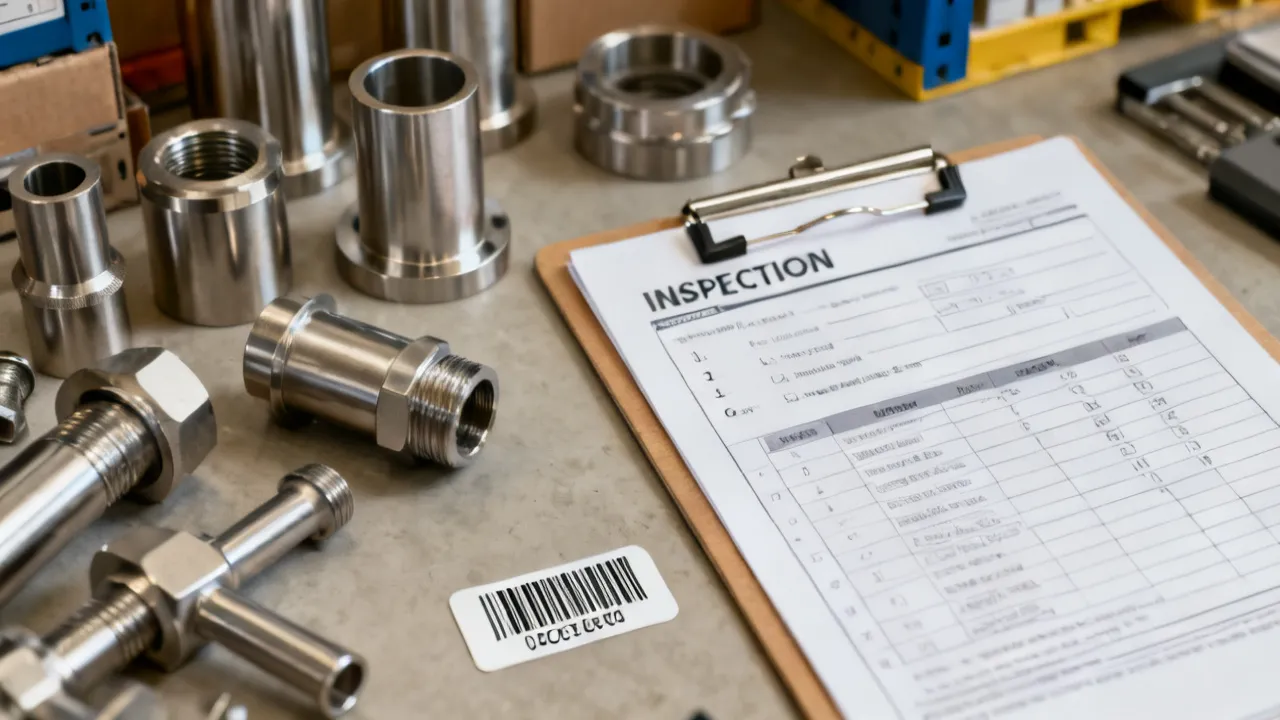
Comprehensive Guide to Item 95999028383x Sourcing
This guide explains how to evaluate and source the item code “95999028383x” using sound procurement practices, supplier due diligence, and clear acceptance criteria. The keywords around “95999028383x” relate to catalog identification and matching requirements. Objectively, accurate part numbering, traceability, and documented inspection methods reduce procurement risk in industrial supply chains.
Supplier Pricing and Parts: Expert Guide
This guide explains how to evaluate supplier pricing and procurement options for 57587795987–related industrial goods, focusing on documentation quality, lead times, and compliance. It reviews the meaning of supplier details and the practical factors behind cost—without assuming any single “top” offer—so you can compare options objectively and reduce procurement risk.

Poriso: A Practical Guide to Selection and Use
This guide explains Poriso from a practical, decision-focused perspective, including how to evaluate quality, sourcing practices, and appropriate use. Objectively, Poriso is discussed as a product category where wording, formulation, and intended application matter. The article also outlines selection conditions, an expert workflow, and FAQs to help buyers assess fit and expectations.

Practical Guide to Qwertyuiop and Nearby Sourcing
This guide explains how to evaluate “Qwertyuiop” as a keyword concept and how to approach supplier sourcing and pricing decisions with objectivity. Background context covers what “Qwertyuiop” typically represents in search/optimization discussions, why suppliers matter in procurement, and how buyers can assess options using consistent criteria.
