This article delves into the art and science of silogism, a form of logical reasoning involving three parts: a major premise, a minor premise, and a conclusion. Silogism is an essential tool in logical argumentation and critical thinking, tracing back to Aristotle. This analysis covers its application in modern contexts, its significance in structured debate, and serves as a guide to mastering this timeless methodology.

Silogism, a cornerstone in logical reasoning and critical thinking, traces its roots back to ancient philosophy. Defined as a form of argument that applies deductive reasoning to arrive at a conclusion based on two or more propositions that are asserted or assumed to be true, the structure of silogism forms the backbone for constructing coherent and persuasive arguments. The importance of silogism lies not only in its historical significance but also in its wide-ranging applications in modern discourse.
Originating from the works of Aristotle, the Greek philosopher profoundly influenced the development of logical structures through his writings in 'Prior Analytics.' Aristotle's method of silogistic reasoning provided a systematic way to define and distinguish valid arguments from those that are flawed. He identified the syllogistic form as a key method in deductive reasoning, which significantly shaped philosophical inquiry.
Although thousands of years old, the style and utility of silogism continue to be relevant, underpinning not only philosophical thought but also practical socio-political discourse and scientific investigations. Aristotle’s methodology was revolutionary as it expanded the scope of logic beyond mere rhetorical persuasion into a discipline grounded in truth and evidence. The influence of his work transcended time, inspiring later philosophers such as Thomas Aquinas and Immanuel Kant, who incorporated syllogistic methods into their respective philosophical frameworks.
Throughout history, different philosophical schools have adapted silogistic reasoning, refining it to suit their paradigms. For instance, in the medieval scholastic philosophy, scholars applied syllogism to theological and metaphysical questions, demonstrating its versatility and importance across various domains of knowledge. In the modern era, the advent of formal logic led to the development of symbolic logic, which built upon Aristotelian foundations to offer a more rigorous mathematical approach to logical operations.
A silogism comprises three main components:
The classical example is:
"All men are mortal. Socrates is a man. Therefore, Socrates is mortal."
Here, the conclusion is inescapable and directly derived from the premises, demonstrating the rigor and clarity of thought enabled by silogistic reasoning. The beauty of a well-constructed silogism lies in its simplicity and unambiguous nature, providing a clear pathway from premises to conclusion. Each component must be carefully crafted to ensure the argument holds and avoids pitfalls of ambiguity or logical error.
While rooted in ancient traditions, silogism remains pertinent across various fields today. In legal frameworks and courtroom arguments, establishing facts through logical deductions is fundamental to ensuring justice. Lawyers employ syllogistic reasoning to construct compelling cases, analyzing evidence and drawing logical connections that lead to inevitable conclusions. For example, a lawyer might argue: “All defendants are presumed innocent until proven guilty. John is a defendant. Therefore, John is presumed innocent.” Such applications illustrate the continued relevance of silogisms in ensuring clarity of argumentation and reinforcing principles of justice.
In the realm of computer science, particularly in artificial intelligence, systems trained with logical frameworks can make decisions by applying syllogistic reasoning to vast data sets. The development of expert systems and decision-making algorithms often leverages the principles of logic to derive conclusions from inputs, creating a structured approach to problem-solving in complex scenarios. These systems mimic human reasoning, allowing for greater efficiency and accuracy in data interpretation.
Moreover, silogism is also prevalent in scientific fields, where hypotheses are tested through experimental evidence. By establishing premises based on existing knowledge, scientists can draw logical conclusions and advance understanding in their respective disciplines. For instance, in biology, a researcher might state: “All living organisms require water to survive. A cactus is a living organism. Therefore, a cactus requires water to survive.” Such syllogistic applications help in the formulation of scientific theories and contribute to knowledge advancement.
Successfully crafting a silogism involves assessment and revision, wherein each part is scrutinized to ensure robustness. Engaging in this process develops not only better logical arguments but also sharpens broader critical thinking capabilities.
A common pitfall in constructing silogisms is the fallacy of the undistributed middle, wherein the middle term in the premises does not link the minor premise unequivocally to the major premise. For instance, consider the flawed argument: “All cats are animals. Some pets are cats. Therefore, some pets are animals.” The middle term “cats” does not provide a sufficient link to draw that specific conclusion. Avoiding such fallacies involves rigorous logic and meticulous consideration of each statement’s implications within the argument.
Another common logical fallacy is known as the fallacy of affirming the consequent. In this scenario, one assumes that if the conclusion is true, then the premises must be true as well. For example: “If it rains, then the ground will be wet. The ground is wet; therefore, it has rained.” This reasoning is flawed because there could be other reasons for the ground being wet. Understanding and recognizing these logical fallacies is crucial for effective and sound reasoning.
Furthermore, one must also be wary of the fallacy of denying the antecedent. An example is: “If the light is on, then the machine is functioning. The light is off, so the machine is not functioning.” This conclusion may be misleading since the machine could fail for reasons unrelated to the light being off. Understanding these common logical errors enhances one’s logical reasoning and fortifies the validity of arguments presented.
| Logical Method | Description | Comparison with Silogism |
|---|---|---|
| Inductive Reasoning | Inductive reasoning derives probable conclusions based on specific observations. It often involves gathering evidence to support a generalized conclusion. | While inductive reasoning allows for certainty, it does not guarantee the truth of the conclusion, as it is based on observation rather than absolute premises. |
| Abductive Reasoning | Abductive reasoning starts with an outcome and seeks the simplest and most likely cause. It is often used in hypothesis formation. | Unlike silogism, which relies on definitive premises, abductive reasoning engages in speculation and suggests multiple possible interpretations. |
| Dialectical Reasoning | Dialectical reasoning is a method of argumentation that involves dialogue and the interplay of opposing perspectives, seeking to identify contradictions. | In contrast to the structure of silogism, dialectical reasoning does not follow a linear path to conclusion but rather aims to reconcile opposing ideas. |
| Non-Monotonic Logic | Non-monotonic logic allows for the possibility that conclusions may become invalid as new information is presented, reflecting real-world reasoning. | Silogism, however, maintains a fixed relationship between premises and conclusions that holds true regardless of additional data. |
A structured form of argument involving deductive reasoning, using major and minor premises to arrive at a conclusion.
Silogism ensures clarity, precision, and logical consistency in arguments, enhancing problem-solving and decision-making skills across disciplines.
Absolutely. In creative and design processes, silogism helps systematically explore ideas and formulate coherent project outlines, aiding in the logical progression of creative thought.
Yes, silogisms can be categorized into various forms, including categorical syllogisms, hypothetical syllogisms, and disjunctive syllogisms, each serving different argumentative purposes.
To enhance your skills in silogistic reasoning, practice constructing arguments, engage with logical puzzles, and critically analyze the reasoning in everyday discussions, fostering an analytical mindset.
In conclusion, mastering the art of silogism can significantly enhance one's ability to engage in rational thought and articulate well-reasoned arguments. By embracing this powerful tool, individuals can sharpen their analytical skills and elevate their discourse across various domains. Engaging with silogistic reasoning fosters deeper understanding of logic itself and improves critical thinking abilities, thereby enriching personal and professional engagements. The principles of silogism encourage clarity of thought, challenge individuals to understand the connections between ideas, and ultimately empower reasoned discourse in an increasingly complex world.
Striking the Perfect Balance: Navigating Premiums and Out-of-Pocket Expenses in Senior Insurance Plans

Explore the Tranquil Bliss of Idyllic Rural Retreats

How to Make Lasting Memories at Disneyland Attractions

Affordable Phones and Plans for Seniors

Affordable Full Mouth Dental Implants Near You

Unlock the Top Kept Secrets to Finding Your Ideal Dentist for Flawless Dental Implant Results!

Discovering Springdale Estates

Unveiling RS Sul Telecom Services

The Guide to Car Trading


Understanding Lato Sensu Education
Lato Sensu is a term used to describe a type of specialized education, typically in the context of postgraduate studies. It emphasizes a flexible, broad approach to learning compared to more narrowly defined courses. This article delves into the significance, scope, and benefits of Lato Sensu programs, particularly how they cater to professionals seeking career advancement.

Unlocking the Secrets of Wizard Lessons
Wizard Lessons offer a glimpse into the mystical world of magic, providing structured learning experiences for aspiring wizards. These lessons cover various aspects of magic, from spell casting to potion making, and are deeply rooted in both tradition and evolving magical practices. Aspiring wizards can delve into these teachings to enhance their magical prowess and understanding of the enchanted arts.

Understanding Lato Sensu Courses
Lato Sensu refers to postgraduate courses offering specialized education, often linked to practical experiences and professional enhancement. These programs emphasize advanced learning tailored to students' chosen fields, with flexible formats to accommodate diverse educational goals and local contexts. This article explores the significance, structure, and advantages of Lato Sensu programs for aspiring professionals.

Understanding Lato Sensu Education Courses
Lato sensu education courses are specialized postgraduate programs offering practical skills and knowledge in specific fields. Distinct from stricto sensu programs focusing on academic research, lato sensu courses are typically shorter and professionally oriented, making them attractive to those seeking career enhancement. This article delves into the intricacies of lato sensu education, exploring its benefits, structure, and global perspective.
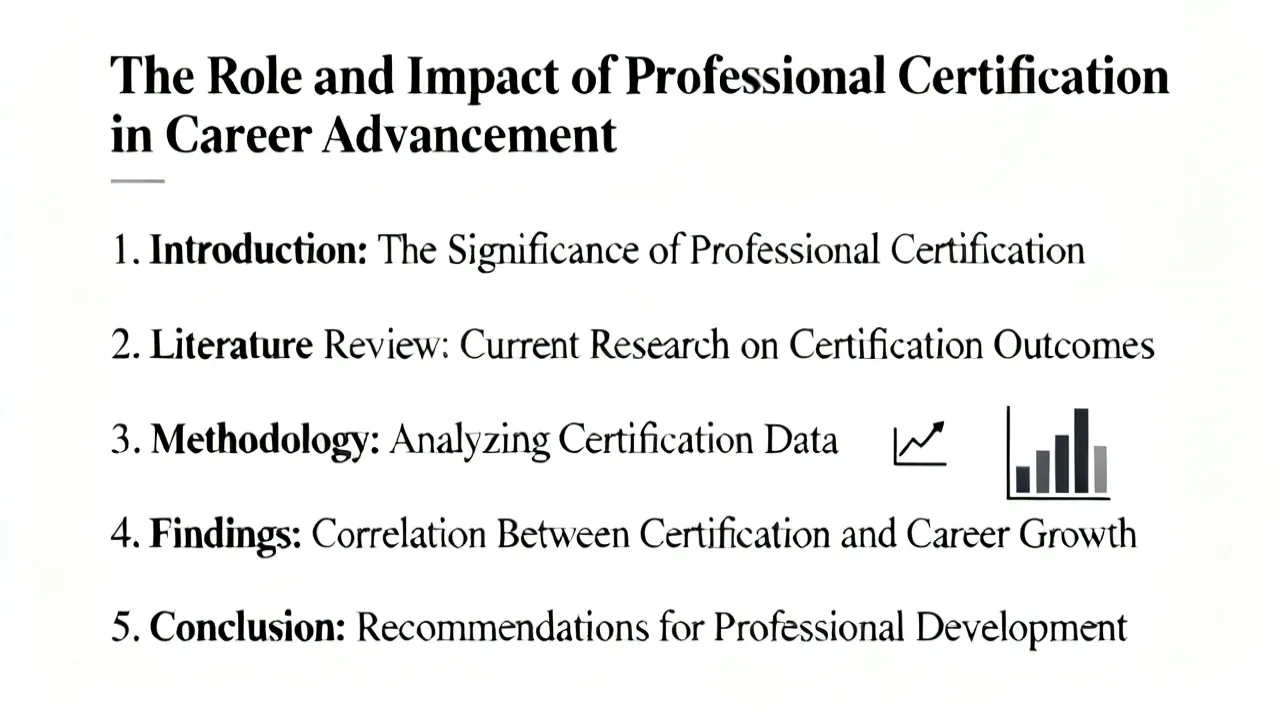
Understanding PECB AAT Certifications
This article offers an in-depth analysis of PECB AAT certifications, renowned for providing a standardized framework for auditing, assessment, and training in various professional sectors. It highlights the importance of these certifications in ensuring industry compliance and enhancing career opportunities. From certification pathways to FAQs, explore how these qualifications uphold standards and elevate expertise in their fields.

Understanding Lato Sensu Education
This guide explores the essential aspects of Lato Sensu programs, which are critical post-graduate courses focusing on specific professional skills enhancement. Typically found in Brazilian education, these programs differ from Stricto Sensu courses by emphasizing practical skills over theoretical research. The article analyzes the elements critical to choosing a Lato Sensu course, such as institution reputation, course content, and potential career outcomes.
