This guide explains how an Ageism Questionnaire helps organizations detect age bias, improve HR decisions, and strengthen inclusion. It provides objective background on the concept of age discrimination, what such tools assess, and why structured evaluation matters in hiring, promotion, and learning opportunities. The article also covers practical implementation conditions, supplier considerations, and FAQs for steady governance.
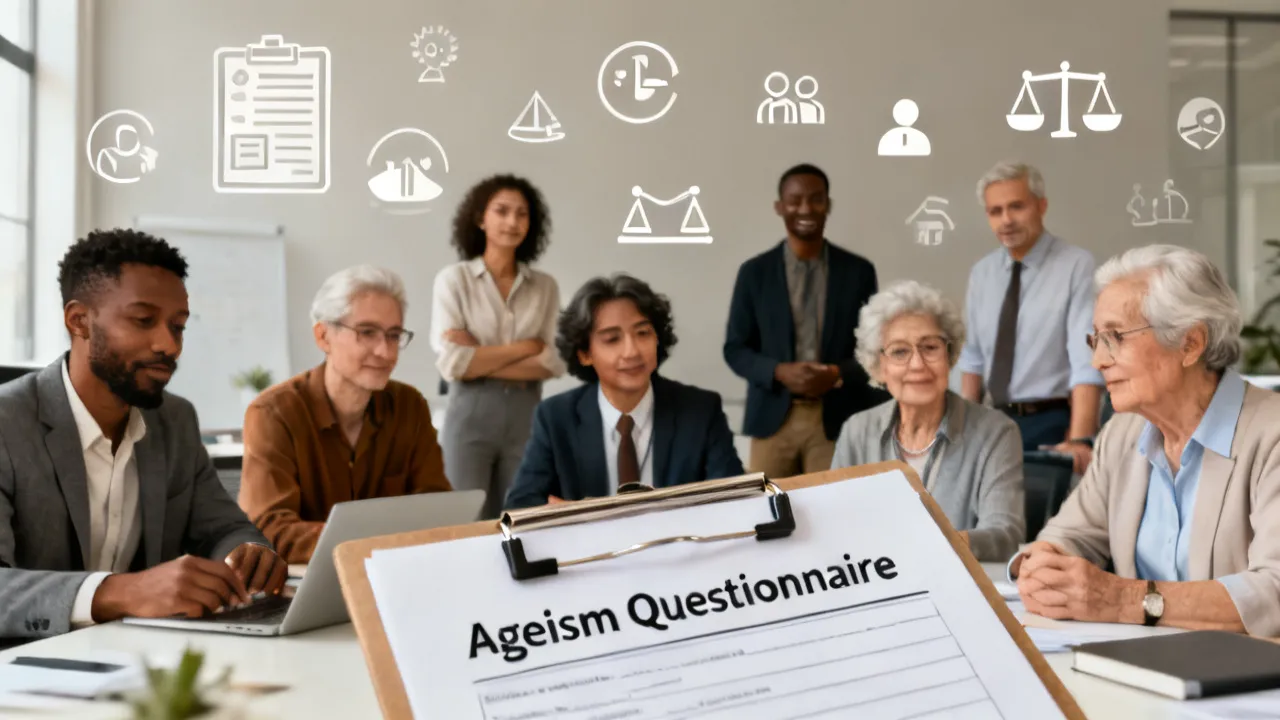
An Ageism Questionnaire is a structured assessment tool designed to surface patterns of age bias in everyday workplace interactions, HR processes, and managerial practices. When used thoughtfully, it can support better recruitment, fair performance evaluation, and more consistent access to training and career opportunities. In practical terms, it helps organizations move from vague concerns about “attitudes” to observable themes that can be discussed, measured, and improved.
In an increasingly scrutinized environment—where internal transparency and equitable decision-making are expected—organizations benefit from instruments that convert qualitative concerns into clear, documentable evidence. This is especially relevant for HR teams responsible for hiring, onboarding, succession planning, and compensation reviews, as well as for leadership that must demonstrate consistent standards across age groups.
Ageism is often harder to prove than other forms of bias because it may show up as a “tone” in everyday communication, as assumptions about energy or adaptability, or as subtle differences in the coaching, feedback, or opportunities employees receive. Employees may interpret these experiences differently, and decision-makers may not consciously connect them to age. An Ageism Questionnaire makes these experiences visible, but the organization’s governance determines whether visibility turns into fairness—or into confusion, defensiveness, or performative compliance.
When implemented well, the questionnaire functions like an early warning system. Instead of waiting for complaints to accumulate (or for legal risk to intensify), HR and leadership can identify where processes may be sending unequal signals to certain age groups. They can then investigate with appropriate tools: decision-log review, policy audits, manager calibration analysis, training access checks, and structured qualitative listening.
Importantly, the questionnaire is not meant to “diagnose individuals.” It is intended to help organizations detect whether standard practices may be producing biased outcomes, and to guide improvements to ensure employment decisions remain job-relevant, consistent, and transparent. That distinction—between individual blame and organizational learning—is central to making the process credible to employees and defensible to regulators, courts, or internal audit functions.
While the exact structure differs by questionnaire design, an Ageism Questionnaire commonly examines whether employees perceive age-related stereotypes in areas such as:
From an expert perspective, the central value is not “labeling” individuals, but identifying organizational patterns. A well-designed tool also distinguishes between personal discomfort and structural behaviors—an important difference when translating results into policies and training.
In practical questionnaire design, this usually involves mapping questions to constructs that reflect how bias shows up in real workplaces. For example:
Because ageism can be subtle, many items are designed to capture repeated experiences rather than isolated incidents. For instance, an item might ask about frequency: “In the past six months, how often have you experienced being spoken to as if your age makes your ideas less relevant?” This frequency-based approach helps separate momentary stress from recurring patterns that may indicate a climate issue.
Another key aspect is differentiation between age-related bias and other related issues. For example, employees may conflate ageism with disability accommodation needs, generational preferences in communication style, or legitimate performance requirements. A good age bias instrument attempts to clarify that the focus is on age-based assumptions, not on normal coaching differences driven by skills gaps or role requirements.
However, even with careful design, no questionnaire can perfectly separate these influences. That is why responsible implementation always includes triangulation with other evidence sources, and why results should be used as an impetus for review rather than as a final verdict.
Interpretation requires care. An Ageism Questionnaire typically captures perceptions and experiences. Perceptions are real data, but they are not the same as definitive proof that discrimination occurred in a specific decision. For that reason, results should be treated as a trigger for deeper review—such as policy audits, review of HR decision logs, focus groups, or targeted process improvements.
For example, if employees report that older staff receive fewer learning opportunities, that signal may reflect multiple underlying causes:
The questionnaire alone cannot resolve which of these is dominant. But it can identify where to look.
Industry top practice emphasizes triangulation: combine questionnaire findings with qualitative interviews, complaint trends (where legally permissible), turnover data by cohort (only if you can do so ethically and in compliance with data protection laws), and documentation of role requirements. This approach reduces misinterpretation and improves organizational learning.
Triangulation also mitigates a common misstep: assuming that high reported bias indicates a “bad actor.” In many organizations, bias results from standardized but outdated procedures: job requirements written in ways that unintentionally filter out certain age groups, performance review forms that reward speed or novelty more than role mastery, or succession planning models that over-weight “future potential” based on stereotypes.
Responsible interpretation also means recognizing that surveys can measure climate, not simply individual intent. A climate that feels dismissive, inconsistent, or lacking in psychological safety can produce high bias signals even where no manager intentionally discriminates. In that scenario, the corrective action often focuses on process clarity, manager capability, communication norms, and fairness training grounded in behavioral examples.
Finally, interpretation should be framed carefully to avoid amplifying stigma. If results are shared inaccurately, employees may conclude that one age group is “the problem.” A well-governed program communicates that the goal is to remove structural and procedural signals that allow stereotypes to influence decisions.
When an organization introduces an Ageism Questionnaire, governance determines whether the tool strengthens fairness or unintentionally creates defensiveness. Consider the following conditions:
These governance elements are especially important where local labor norms and employee expectations about workplace dialogue differ. For instance, in cultures where employees may hesitate to report concerns directly, a questionnaire can be a safer entry point—provided the organization commits to visible improvements afterward.
Governance also includes practical decisions about who can see raw data. Common best practice is to restrict access to raw responses to a small number of trained analytics staff or HR specialists under strict controls. Leadership may see aggregated findings. Managers may receive targeted insights but should not be exposed to identification signals that could create retaliation risk.
A key governance requirement is defining how results will influence decisions. If employees believe the questionnaire will “go nowhere,” trust declines and response quality suffers. On the other hand, if employees believe their responses will trigger immediate disciplinary action against them, they may avoid honesty—leading to under-reporting. This tension means that governance must explicitly align expectations: feedback informs fairness improvements, and the organization will document its action steps regardless of whether those steps are expected to change a specific individual’s situation.
Another governance area is the question of language. In some organizations, “ageism” is a sensitive term. Employees may worry it is insulting or politically charged. Governance should manage this by using neutral phrasing such as “age-based bias” or “age-related stereotypes” in communications, while keeping the instrument aligned with legal and policy definitions used internally.
Also, governance must account for accessibility. Employees with disabilities, employees in remote locations, and employees using assistive technology might experience barriers to survey participation. An age bias questionnaire should meet basic accessibility standards (for example, screen-reader compatibility) and provide accommodations where needed.
Finally, governance should plan for what happens if results reveal urgent risk. If a questionnaire indicates severe patterns in harassment or disrespect, governance should define escalation pathways and a timeline for immediate review of relevant departments—rather than waiting for a later cycle. Even if the instrument is designed for fairness assessment, it cannot ignore high-risk signals.
You may see vendors advertise an Ageism Questionnaire as part of HR analytics, culture assessment, or inclusion programs. Pricing is rarely uniform because it depends on scope (single department vs. enterprise-wide), administration mode (online vs. assisted), language coverage, reporting formats, and the inclusion of facilitation workshops or follow-up analytics. Therefore, it’s better to evaluate “total implementation cost” rather than relying on one quoted figure.
From a procurement standpoint, supplier selection should focus on: data handling practices; the availability of aggregated reporting; questionnaire transparency (items and constructs); whether the provider can support audit trails; and whether the organization can customize wording for its context while preserving psychometric integrity. If a supplier offers customization, ensure you understand how changes affect validity and reliability.
Because you requested narrative integration of “price information” and “supplier details,” note that providers commonly quote pricing based on usage and deliverables. To avoid inaccurate claims, organizations should request a written proposal that specifies: onboarding fees, per-respondent or per-site pricing (if any), reporting package contents, support hours, and timeline to first report. A disciplined procurement process protects the organization and improves the chance the questionnaire yields actionable, defensible outcomes.
When comparing suppliers, consider the “hidden” components that affect real costs:
In many cases, the vendor’s licensing cost is only a fraction of total implementation effort. Organizations should assess internal capacity: the HR analytics lead who interprets results, the HRBPs who translate insights into process improvements, and the legal/compliance reviewer who ensures the approach aligns with relevant privacy and discrimination frameworks.
Procurement should also evaluate how the supplier handles data retention and deletion. For an age bias questionnaire, data sensitivity is high because responses may reflect experiences of discrimination or harassment. A credible vendor will provide clear retention schedules, encryption practices, and contractual protections that govern cross-border data transfers where relevant.
Finally, supplier details matter when it comes to transparency. If employees and internal stakeholders cannot understand what the questionnaire measures, trust declines. Vendors should be able to explain the constructs measured, the logic behind aggregation, and the way reports are generated.
Age discrimination can occur in hiring, promotions, training, compensation, and everyday treatment. It may be explicit (direct statements or policies that disadvantage an age group) or implicit (assumptions about competence, energy, adaptability, or learning speed). An Ageism Questionnaire helps identify the latter as well, because employees often experience subtle bias through patterns rather than isolated incidents.
To keep the discussion objective, it helps to ground the topic in established frameworks. Major legal and policy discussions of age-based discrimination emphasize that fairness requires consistent standards and that stereotypes can undermine equal opportunity. While specific legal regimes differ by jurisdiction, the overall principle is consistent: employment decisions should be based on job-relevant criteria rather than age-related assumptions.
For reliable context, organizations often reference resources from established bodies such as the U.S. Equal Employment Opportunity Commission (EEOC) and the International Labour Organization (ILO). These resources describe how discriminatory conduct may appear and what employers can do to reduce risk through training, policy clarity, and fair decision processes.
Measurement is complex because age is both a demographic and a social signal. Employees may experience bias not only because of chronological age but because others associate them with assumed motivations, communication preferences, or “fit” for certain organizational narratives. For instance:
This is why an ageism instrument often includes items that focus on how opportunities and expectations are shaped. It also explains why interpreting results requires context. For example, a workplace that uses a heavy “fast-paced” performance rhetoric may unintentionally disadvantage employees who need more time to ramp up due to role complexity—without it being age-based discrimination. The organization must distinguish role requirements and onboarding realities from age-coded assumptions.
Another complexity is that ageism may be bidirectional. Older employees can experience bias, but younger employees can also experience assumptions, such as being treated as less serious or less committed. A high-quality questionnaire therefore measures bias impacts across age groups rather than targeting only one direction.
Finally, measurement is influenced by response dynamics. Employees’ willingness to answer honestly may vary by psychological safety, prior experiences with HR, and fear of retaliation. Organizations mitigate these risks through confidentiality messaging, protected administration processes, and careful reporting boundaries.
An Ageism Questionnaire tends to be very effective when used as part of a broader inclusion system rather than a standalone “survey event.” It works top under these conditions:
Even then, measurement limitations remain. Response bias can occur if employees distrust the process. If respondents fear repercussions, the tool may under-capture negative experiences. Conversely, if the organization communicates improvement plans effectively, response quality often improves.
To make the tool effective, leadership commitment must be more than a statement. It should be visible in budget decisions, time allocation, and the authority HR gives to fix processes. For instance, if the questionnaire indicates that promotion criteria are interpreted inconsistently, leaders must authorize HR and talent teams to revise calibration guides, update evaluation forms, and provide manager training focused on behavioral evaluation rather than subjective judgments.
Repeated measurement matters because bias is often maintained by routine behavior. Even when managers attend a one-time training, old practices may persist in staffing decisions, performance ratings, or training recommendations. Follow-up surveys help determine whether those signals changed.
Employee engagement also affects response rates and data quality. If employees believe the organization will only publish “good news” or will ignore ambiguous findings, they may stop responding or may respond defensively. Strong employee engagement includes not only collecting responses but also communicating what the organization found (at an aggregated level) and what it will do next.
Another ingredient is the organizational capacity to act. If HR has no ability to change training access logic or promotion procedures, the questionnaire can create frustration rather than fairness improvements. Governance should therefore include an early “capability check”: identify which process elements are realistically modifiable in your timeframe.
After administering an Ageism Questionnaire, organizations should move through an improvement cycle:
This method respects the fact that ageism often reflects organizational norms—how people are spoken to, how expectations are set, and how opportunities are offered—rather than a single “bad actor.”
To expand on this cycle in a practical manner, many organizations benefit from establishing a structured “fairness working group.” This group can include HR, legal/compliance, workforce analytics, learning and development leaders, and representatives from employee networks. The group can decide how themes will be translated into interventions and what metrics will track progress.
1) Aggregate analysis should not stop at overall scores. Good analysis typically breaks findings down by:
Even when you do not compute direct age-versus-score correlations, segmentation helps identify which organizational practices might be driving bias signals.
2) Root-cause review should be disciplined. If employees report unequal feedback, HR should examine whether feedback is standardized across managers. It might inspect performance calibration documentation, look for inconsistent rating distributions, and compare whether coaching plans are individualized or mandated. If employees report barriers to technology adoption, HR should examine whether training prerequisites exclude certain roles or whether documentation language and onboarding design assume prior familiarity.
3) Interventions should be targeted to root causes. Examples include:
4) Communication should be honest about uncertainty. If the organization is reviewing multiple possible causes, it should communicate that the investigation is underway. Employees do not expect instant perfection; they expect transparency and follow-through. Where improvements will not be feasible due to legal constraints, budget limits, or operational realities, it should say so and explain what alternative steps will still be taken.
5) Follow-up measurement should be timed to evaluate the interventions. If a manager training is delivered in month 1, the follow-up survey should capture whether feedback quality changed after managers had time to apply learning. If training access is revised, follow-up should allow for enrollment cycles. A well-timed follow-up reduces the risk of misleading conclusions.
Many organizations also benefit from selecting a small set of “leading indicators,” such as:
Leading indicators can help identify progress before the next survey wave. They also help demonstrate accountability to employees, because employees can see practical changes even if the full survey data takes time.
The table below is a supplement to help organizations plan a responsible implementation. It is not a substitute for legal counsel, but it clarifies practical conditions that typically apply when deploying an Ageism Questionnaire.
| Component | Common Options | Practical Conditions / Requirements |
|---|---|---|
| Questionnaire scope | Department-level, company-wide, or role-specific | Define target population; ensure comparability across groups; avoid mixing unrelated employee cohorts without explanation. |
| Administration method | Anonymous online survey, supported sessions, or hybrid | Maintain confidentiality; publish timelines; standardize instructions; provide help channels for concerns. |
| Response confidentiality | Aggregated reporting, suppression rules, role-based access controls | Use suppression thresholds (e.g., minimum respondent counts) to reduce re-identification risk. |
| Data handling | Internal-only processing vs. outsourced analytics | Document data flows; confirm retention schedule; ensure compliance with applicable privacy regulations. |
| Customization | Vendor templates vs. localized wording adaptations | Track changes; validate comprehension; preserve measurement meaning to avoid “survey drift.” |
| Action governance | HR-led remediation plan, cross-functional review board | Name owners; define decision rights; agree on intervention categories and timelines. |
| Follow-up cadence | Single assessment, periodic pulse checks | Plan measurement intervals that match organizational change cycles; avoid survey fatigue. |
To make governance even more actionable, organizations sometimes add a “decision trace” document. This document records: what decisions the questionnaire is expected to inform, which findings trigger which types of review, and what documentation will be kept. This supports internal audit readiness and helps avoid the situation where results become an uncomfortable narrative without operational consequences.
The following is a practical, step-by-step approach that organizations can adapt. It is written from an expert HR analytics and governance viewpoint, prioritizing fairness, defensibility, and employee trust.
To further strengthen this step-by-step approach, organizations may add two optional “quality gates.”
In practice, organizations sometimes adopt an Ageism Questionnaire but fail to extract value due to predictable pitfalls. An expert approach focuses on preempting these risks:
Additional pitfalls deserve attention because they often determine whether the project succeeds:
An Ageism Questionnaire is a structured tool used to gather employees’ perceptions and experiences related to age-based bias or stereotypes in workplace practices. The goal is to identify patterns that may require process improvement.
Typically, the organization administers it to employees across roles and departments that are relevant to the fairness areas being evaluated—such as hiring, promotion, learning access, and day-to-day treatment. The design should define target populations and support defensible aggregation.
In some organizations, leadership may also consider adding optional modules for particular functions. For example, employees involved in recruiting might answer items specifically tied to interview structure and selection criteria, while employees involved in training delivery might answer items tied to learning communications and scheduling equity. These modules can increase relevance, but they must be governed to prevent fragmentation that undermines comparison across groups.
No. Questionnaire results generally reflect perceptions and experiences, not legal determinations. Organizations should treat findings as a prompt for deeper review—such as process audits, decision-log review, and qualitative follow-up—before making conclusions.
Legal determinations often require evidence tied to specific decisions, timing, and comparators. An age bias questionnaire can strengthen the organization’s internal understanding of risk areas, but it does not replace formal investigations or legal analysis when complaints arise.
Top practice is to report aggregated themes rather than identifying individuals or small groups. Use suppression rules when sample sizes are low, and provide enough context for managers and HR to understand what to improve.
Organizations should also be careful to present results with interpretive guardrails. For example, a chart showing differences across groups should include context about sample size and survey timing. If employees interpret results as accusations against specific teams, the program’s credibility can deteriorate.
Suppliers may provide questionnaire templates, administration support, reporting, or facilitation services. Pricing commonly depends on deliverables and scope. Organizations should request a written breakdown of costs (implementation, support, reporting package contents) and evaluate total implementation cost, including governance and follow-up support.
Because suppliers vary widely in scope, a useful procurement tactic is to ask vendors to provide a “project plan” with responsibilities. For example: who configures survey language, who manages reminders, who produces the first reporting pack, and who delivers action-planning workshops. The cost then becomes transparent as time and deliverables, not just as a license fee.
Yes, but localization should preserve meaning. If wording is adapted for language or cultural nuance, organizations should pilot test comprehension and ensure changes don’t distort what constructs the questionnaire measures.
Localization can also involve adapting examples or references that might confuse employees. However, adaptation should remain within a controlled framework so that the instrument remains comparable across locations.
A common approach is to schedule assessments to align with change cycles (for example, after implementing manager training or revising promotion processes). Frequency should balance actionable learning with the risk of survey fatigue.
Many organizations start with a baseline assessment and then schedule follow-ups at intervals that match intervention timing. For example, a baseline in Q1, follow-up in Q3 after manager training and process changes, and then a longer-term assessment in the next year to evaluate sustained improvements.
Credible outcomes typically require confidentiality safeguards, consistent administration, clear purpose communication, transparent action ownership, and triangulation with qualitative context and HR process review.
Credibility also depends on avoiding selective reporting. If leadership only shares the most favorable items, employees will notice and trust declines. Credible programs report balanced findings, including areas needing improvement.
Treat the results as a start: review relevant HR practices, hold structured listening sessions, identify root causes, implement targeted interventions, and communicate progress. Document decisions to support defensibility and accountability.
When results are concerning, avoid impulsive responses like blaming managers without evidence. Instead, conduct structured analysis to understand whether issues stem from policies, training, selection mechanisms, communication norms, or inconsistent evaluation practices.
Yes. Organizations can reference guidance from established bodies such as the U.S. Equal Employment Opportunity Commission (EEOC) and the International Labour Organization (ILO) for background on age discrimination concepts and employer responsibilities. For analytics methods, consult academic and professional HR research on employee survey validity, confidentiality practices, and organizational change evaluation.
Many organizations also benefit from referencing competency-based HR frameworks and evidence-based management principles, which emphasize standardized criteria, documentation, and fairness in decision-making.
Because this topic intersects with employment fairness and governance, it is prudent to anchor your implementation in reputable guidance rather than assumptions. Two commonly referenced resources include:
For research approaches (survey design, confidentiality, and organizational measurement), organizations can also rely on peer-reviewed work in organizational psychology and HR measurement, which typically emphasizes that surveys are strongest when paired with action planning and transparent follow-up.
Beyond these resources, organizations often choose to ground their training in concrete behavioral examples: how managers can provide feedback that is job-relevant; how interviewers can evaluate competencies without stereotypes; how HR can design training to be inclusive and accessible; and how leadership can create norms that discourage age-coded disrespect.
Effective training typically avoids generic statements like “don’t discriminate.” Instead, it focuses on what “fair” looks like in practice: consistent criteria, equitable opportunity signals, structured decision tools, and respectful communication.
An Ageism Questionnaire is very valuable when it functions as part of an evidence-informed fairness system. Rather than treating bias as an abstract moral concern, it provides a structured way to detect themes that may influence hiring, promotion, training access, and everyday workplace interactions. When governance, confidentiality, and follow-through are built into the process, the questionnaire can help organizations move from concern to improvement with defensible, measurable outcomes.
If you’re planning an implementation, begin by defining the fairness decisions you want to improve, select or design a tool that supports aggregated, responsible reporting, and then commit to an action cycle tied to root-cause analysis. That combination is what transforms an Ageism Questionnaire from a form into a practical instrument of workplace fairness.
Ultimately, the most important measure of success is not whether the questionnaire produces scores, but whether workplace processes become more consistent and more equitable across age groups. When employees see that feedback is taken seriously, that HR processes are reviewed, and that opportunities are distributed in a job-relevant and transparent way, the questionnaire becomes more than a survey—it becomes a fairness engine.
Striking the Perfect Balance: Navigating Premiums and Out-of-Pocket Expenses in Senior Insurance Plans

Explore the Tranquil Bliss of Idyllic Rural Retreats

How to Make Lasting Memories at Disneyland Attractions

Affordable Phones and Plans for Seniors

Affordable Full Mouth Dental Implants Near You

Unlock the Top Kept Secrets to Finding Your Ideal Dentist for Flawless Dental Implant Results!

Discovering Springdale Estates

Unveiling RS Sul Telecom Services

The Guide to Car Trading

Striking the Perfect Balance: Navigating Premiums and Out-of-Pocket Expenses in Senior Insurance Plans
Finding an optimal mix of insurance premiums and direct medical costs is crucial for effective healthcare budgeting. This discussion will delve into tactics to achieve a balance that aligns with your finances.
Unlock the Top Kept Secrets to Finding Your Ideal Dentist for Flawless Dental Implant Results!
Selecting an adept dentist is critical for ensuring the efficacy and your satisfaction during a dental implant procedure. This in-depth guide is designed to assist you in finding a dental expert who meets your personal requirements, guaranteeing that your path to dental implant success is seamless and fruitful.

Protect Your Perfect Smile: Master the Art of Defending Your Teeth Against Acid Attacks
Though they may tantalize the palate and invigorate the senses, foods and drinks with high acid content are a double-edged sword with regard to oral wellness. Continual exposure to these substances progressively strips away the protective enamel from our teeth, which can lead to increased sensitivity, changes in coloration, and a variety of other dental complications. This composition offers insight into relishing these zesty favorites while safeguarding your teeth from damage.

Discovering Heartis Eagle Mountain
Heartis Eagle Mountain is a prominent senior living community that offers a range of services and amenities aimed at enhancing the quality of life for its residents. Situated in a peaceful setting, it combines exceptional care with engaging activities, providing a holistic environment that caters to seniors' physical, emotional, and social needs.

Unveiling the Top Dental Implant Options for Seniors: Transform Your Smile with the Ultimate Guide to Restored Radiance
The significance of oral health cannot be understated for the elderly population as they are commonly afflicted with tooth loss due to a multitude of factors, including decay and gum disease. Dental implants have risen to prominence as a prime method of teeth replacement, acclaimed for their long-lasting nature, functional prowess, and striking similarity to our own teeth. This discussion delves deeply into the realm of dental implants to demonstrate why they are considered the optimal choice for aged individuals aiming to enhance their smiles and overall life quality.

Boost Your Defenses: 20 Proven Strategies for a Stronger Immune System
Having a robust immune system is essential to protect our bodies from harmful microorganisms and preserve our general health. Although some elements that affect our immunity are out of our hands, many lifestyle decisions can help us enhance our immune defenses naturally. This piece delves into 20 practical methods to empower your immune system, increasing your capacity to ward off diseases and sicknesses.
