This guide explains how to evaluate Xxx18 specifications, suppliers, and procurement readiness. Objectively, Xxx18 is treated as a technical identifier used in product documentation and sourcing workflows, often tied to versioning, compatibility, and traceability. You’ll also find a practical decision framework, clear conditions for purchasing, and expert-style FAQs to reduce risk during selection.
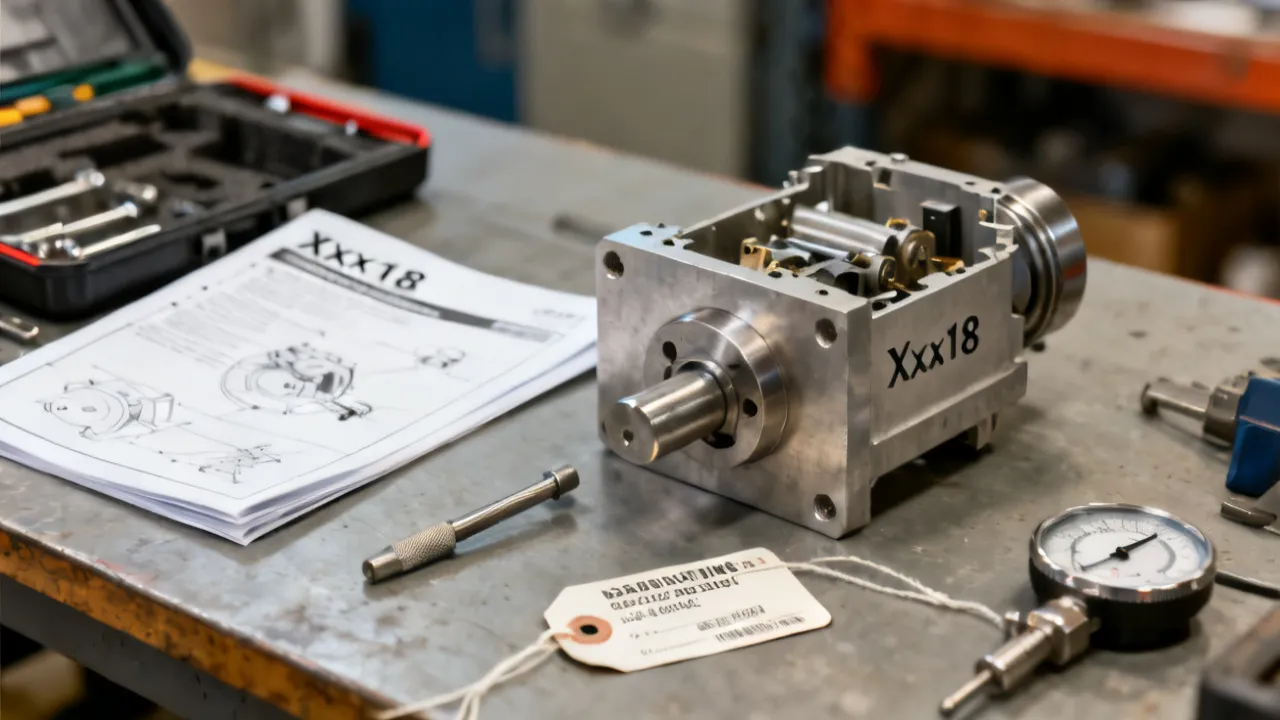
When sourcing or implementing Xxx18, the priority is not the label itself, but the verifiable documentation, compatibility boundaries, and traceability that come with it. In professional procurement practice, “Xxx18” should be treated like a controlled reference code that must align with your use-case requirements—particularly around version, materials, tolerances, installation or integration steps, and quality evidence. If a supplier cannot clearly map Xxx18 to current production status and relevant documentation, the risk quickly escalates.
Because buyers sometimes encounter placeholder or partially specified keywords (including the fragmented strings provided alongside “Xxx18” in some requests), your first step should be to standardize the request: define the exact variant, expected interfaces, target performance range, and acceptance criteria. This approach is aligned with how many industries handle technical SKUs—where the same code can correspond to multiple revisions, manufacturing lots, or bundled components.
To support objective decision-making, this guide focuses on what to confirm, which supplier signals matter, and how to structure requirements so that suppliers respond with measurable, audit-friendly information. That means you should ask for documents that allow you to verify fit-for-purpose, rather than relying on marketing language.
Procurement teams often underestimate how quickly “almost the right version” becomes “the wrong version.” A revision change can affect form/fit/function, regulatory status, electrical behavior, mechanical tolerances, software compatibility, and even service life assumptions. The practical outcome is that the cost of a mistake is rarely limited to the unit price; it often expands into installation downtime, rework, testing, schedule slippage, warranty disputes, and compliance gaps.
Therefore, this overview should be treated as a framework for evidence-first sourcing. Even if you only have a reference code today, you can—and should—build a procurement package that compels suppliers to clarify what Xxx18 actually means in their current production chain.
In many technical procurement and implementation environments, a reference like Xxx18 functions as a traceable identifier. It is commonly used to connect product documentation to what is actually shipped or installed. Practically, that means Xxx18 is often linked to one or more of the following:
In other words, buyers should treat Xxx18 as a “key” that must unlock consistent technical and quality information—especially where safety, reliability, or regulatory alignment matters.
It’s also useful to distinguish between several ways a reference code might be used in vendor ecosystems:
The reason this matters is that a buyer can accidentally confirm the wrong type of identifier. For example, confirming “Xxx18 exists” is insufficient if your real goal is to receive a unit with a specific drawing revision, material spec, and inspection results. A supplier might deliver a “Xxx18” unit that appears correct operationally but differs in a revision detail that affects compliance or long-term reliability.
When the prompt includes fragmented strings alongside Xxx18, it can indicate that the requester has partial information, or that the reference is embedded in a larger specification line (e.g., part number + revision + option suffix). Buyers should therefore assume the code may have structure and require decomposition: base part, variant, revision, and configuration options.
Professional procurement treats decomposition as a standard step: identify which parts of the reference code are stable and which change across revisions or production lots. Then, require the supplier to confirm each element explicitly.
An expert procurement approach centers on clarifying requirements before negotiations. Below is what you should verify for Xxx18—not as assumptions, but as documented facts:
Even when suppliers appear responsive, procurement mistakes often come from incomplete variant clarity or missing quality evidence—not from price alone. A buyer can reduce this risk with a “document-first” approach: require the supplier to provide a documentation pack that is consistent and revision-controlled before finalizing acceptance criteria and payment terms.
It also helps to align internal roles. For example, procurement typically owns the purchase order, QA owns inspection evidence, engineering owns compatibility verification, and logistics owns receiving and storage requirements. If these roles are not synchronized, documentation might be provided but not used correctly at receiving, or acceptance criteria might be drafted without engineering input.
When comparing suppliers for Xxx18, focus on evidence and operational maturity. From an industry expert perspective, these signals usually outperform promotional claims:
If you have encountered partial or unclear keywords alongside Xxx18 (for example, fragmented strings that look like placeholders), treat them as request errors until you can confirm the supplier’s meaning. A professional buyer will correct the request so the supplier can quote against the correct specification.
There is also a practical supplier behavior pattern worth watching: suppliers who truly control their manufacturing outputs will generally be comfortable providing structured documentation and answering detailed questions. Suppliers who rely heavily on verbal assurances often cannot provide the necessary evidence later.
To make this evaluation concrete, you can ask suppliers the same set of technical questions and score responses based on clarity, traceability, and whether they provide documentary references. A standardized “question pack” can include:
The key is that your supplier evaluation should test whether the supplier can support auditability. Even if you never perform a full audit, audit-level traceability reduces future uncertainty.
You mentioned price information, but the provided prompt does not include specific numerical values, supplier names, or a concrete location. In professional procurement, that absence matters: without exact pricing inputs (unit price, volume breaks, incoterms, warranty terms, and documentation fees), any “final cost” estimate would be speculative.
So the objective way to handle price for Xxx18 is to evaluate total cost components that typically affect budgets:
If you later provide the missing price and supplier details, the same framework can be used to compare quotes line-by-line in a structured way. A buyer can also reduce the risk of overcommitting by using staged commitments: e.g., request documentary evidence and compatibility confirmation before placing the order, and only confirm final volume after design/engineering validation.
It’s also important to avoid conflating “cost” with “lowest bid.” With technical items like Xxx18, lifecycle costs are often dominated by:
Accordingly, procurement should define what level of documentary evidence is required before approval—then treat that evidence as part of the cost equation. Suppliers who include comprehensive documentation and traceability may appear more expensive upfront but can reduce internal verification effort and reduce failure risk.
Procurement for a technical identifier like Xxx18 often comes with conditions that must be met before acceptance or installation. These conditions can be internal (your processes) and external (supplier policies). Common categories include:
The key is to ensure these conditions are written into the purchase agreement so that both parties have the same expectations—especially around acceptance criteria and revision changes.
Buyers should also anticipate how conditions may interact with engineering changes during the project lifecycle. For instance, you may place an order for Xxx18 revision “B,” but during installation your engineering team learns of a later revision “C” required for improved compatibility. Unless your contract and change management terms are robust, you could face pricing disputes, schedule delays, or acceptance conflicts.
To avoid these issues, consider the following operational clarifications in procurement documentation:
These clarifications may seem administrative, but they directly influence the ability to correct issues quickly. In technical projects, speed of correction is often as important as the original sourcing decision.
No city or country was explicitly provided in the keywords in a way that can be localized. If you later provide a location (and confirm the intended market), you can tailor the supplier search and compliance framing to local norms—such as documentation language expectations, inspection practices, and common procurement timelines.
For now, this guide uses a neutral, cross-industry approach, which is usually appropriate when the goal is objective sourcing and risk control for Xxx18.
However, buyers should still consider localization effects even when location is not provided. For example:
Even without the final location, you can draft requirements that are region-agnostic in technical form, while leaving documentation language and compliance declarations subject to local specification.
The table below is designed as a practical comparison guide. It uses categories that buyers commonly face when selecting and verifying a technical product identified as Xxx18. Because no specific suppliers or locations were provided, the “supplier” fields are intentionally generic and should be mapped to your actual vendor quotes.
| Option Type | Typical Source of Evidence | Step-by-Step Buyer Actions | Conditions / Requirements to Confirm |
|---|---|---|---|
| Supplier direct (OEM/Manufacturer) | Revision-controlled datasheet, drawing package, lot traceability records, test documentation |
1) Confirm exact Xxx18 revision 2) Request interface/spec alignment sheet 3) Validate quality evidence and traceability workflow 4) Agree on acceptance criteria for receiving inspection |
Revision must match shipped unit; documentation must be complete; traceability must be shareable prior to or at delivery |
| Authorized distributor | Manufacturer documentation plus distributor quote, handling and storage statement |
1) Confirm distributor receives from approved channel 2) Request copy of the very current Xxx18 revision documentation 3) Ask how they handle returns and rework prevention 4) Verify labeling and packaging conditions on arrival |
Must provide evidence that the unit is current Xxx18 revision; must clarify storage and handling responsibilities |
| Integrator / solution provider bundle | System-level compatibility documentation, integration guide, verification/commissioning plan |
1) Ask for a bill of materials that maps to Xxx18 2) Require test plan tied to acceptance criteria 3) Confirm integration constraints and required tooling/procedures 4) Validate warranty scope and responsibility boundaries |
Bundle must define exactly which components correspond to Xxx18; integration acceptance must be documented |
| Secondary/used inventory (if applicable) | Inspection report, condition statement, partial documentation if available |
1) Request condition evidence and serial/lot matching (if possible) 2) Confirm whether Xxx18 revision is still supported 3) Run receiving inspection and functional checks 4) Document acceptance criteria before procurement |
May require additional testing; warranty terms are often limited; traceability evidence may be incomplete |
Because used/secondary inventory can introduce uncertainty, buyers should strengthen acceptance criteria. For example, you may require more rigorous testing, require disassembly or calibration evidence (if feasible), and require serial/lot verification against any available production records. If the supplier cannot provide traceability, you may treat the purchase as noncompliant with your normal sourcing requirements unless additional internal validation offsets the risk.
Also note that “bundle” purchasing (integrator solutions) introduces a shared responsibility challenge: if integration fails, the cause may be ambiguous (Xxx18 unit vs integration procedure vs related components). To manage that, acceptance criteria should specify which tests prove compatibility with Xxx18 specifically, and which tests validate the entire solution. The supplier contract should reflect these boundaries.
Technical identifiers like Xxx18 are commonly tied to structured documentation and controlled production processes. In regulated or safety-relevant supply chains, buyers often rely on traceability, revision control, and documented verification—principles consistent with recognized quality management frameworks.
For example, ISO-style quality management concepts emphasize process control, document control, and traceability practices. While the specific applicable standard depends on your industry, these principles are widely reflected in official quality management guidance such as:
Using such frameworks as an internal reference helps ensure that your evaluation of Xxx18 is rigorous and consistent.
In practice, buyers often implement these concepts by requiring:
These practices don’t merely support audits. They directly reduce downtime and disagreement. If something fails, evidence enables root-cause analysis instead of guessing.
Below is a step-by-step guide you can apply regardless of the missing vendor names and prices in the prompt. Once you provide actual supplier quotes and numerical cost details, you can convert this into a vendor comparison checklist.
To make this step-by-step approach even more actionable, buyers can incorporate three practical artifacts into procurement:
When these artifacts exist, procurement becomes repeatable. That matters when projects scale or when multiple sites source Xxx18 concurrently.
“Xxx18” is top treated as a technical reference code tied to a specific revision/configuration. A buyer should verify what exact version it represents and ensure it maps to compatible specifications and documented quality evidence. In practice, the buyer should require a “revision-controlled mapping” from the supplier: which drawing revision, which documentation revision, and which production identifiers correspond to the delivered units.
Request revision-controlled documentation from the supplier and require matching on delivery: labels, documentation revision numbers, and traceability records (lot/batch/serial where applicable). Then perform receiving inspection that checks for alignment, not just appearance. A robust confirmation process includes cross-checking at least two independent indicators (e.g., label identifier and documentation revision, plus optionally test record reference numbers).
Ask the supplier to provide a documentation list and specify what is included in the price and what requires an add-on. Then update your purchase agreement so missing documentation cannot be “resolved later” without your approval. Ideally, you should attach a documentation checklist to the purchase order and include the consequence of noncompliance (e.g., withheld acceptance until documentation is provided).
Not by default. Evaluate total cost of verification, documentation, and any additional receiving or integration testing. A slightly higher unit price can be rational if it reduces risk through better traceability, clearer acceptance criteria, and stronger evidence. Also consider schedule risk: delays from documentation gaps or nonconformities can be far more expensive than price differences.
Require change management terms: notice period, whether substitution is allowed, what documentation will be provided, and how you will validate compatibility. Without this, revision changes can create integration or compliance gaps. A good clause distinguishes between “drop-in equivalent” changes (pre-approved equivalence) and “non-equivalent” changes (requires additional approvals and verification).
Yes: ambiguous variant descriptions, missing revision confirmation, unverified compatibility assumptions, incomplete traceability evidence, and acceptance criteria that are not measurable. These issues are preventable with a structured requirement and verification workflow. Another common mistake is failing to align engineering and QA on what constitutes acceptance; if engineering expects functional verification but QA only checks packaging, disputes can arise.
In general, you should prefer supplier documentation and any authorized technical evidence. Third-party information can be helpful for context (e.g., general background on components), but your acceptance decision should be supported by documents tied to the specific Xxx18 revision you are receiving. Third-party documents should not be treated as a substitute for supplier traceability records when your contract or compliance requirements demand unit-specific evidence.
For many higher-risk technical purchases, buyers commonly request: a revision-controlled datasheet/drawing, a conformance or inspection certificate that references unit identifiers, a test/inspection report summary relevant to your acceptance criteria, installation/integration instructions for the specific revision, and a traceability report or explanation showing how lot/batch/serial numbers map to records. The exact minimum depends on your risk classification, but if suppliers cannot provide an evidence pack, that is itself an important signal.
If lot traceability cannot be provided, you should treat that as a risk that must be mitigated. Mitigation options include: additional receiving testing, requiring certificates of material conformity (as applicable), obtaining alternative evidence such as factory inspection records that reference production dates and batch IDs, or limiting use to non-critical applications. If the purchase is safety or compliance critical, you may need to revise your sourcing strategy rather than attempting to proceed with insufficient traceability.
If documentation revision appears current but does not match the shipped unit identifiers, you should stop acceptance and request correction or clarification from the supplier. “Current” in the abstract is not enough; what matters is revision alignment to the shipped unit. Require supplier to reconcile: either the label is wrong, the unit is not the quoted revision, or the documentation package is mismatched. Your contract should define who bears the cost and timeline impact of this reconciliation.
To source Xxx18 effectively, buyers should anchor decisions in documented revision control, traceability, and measurable acceptance criteria. Because price and supplier details were not specified in the prompt, this guide intentionally avoids speculative pricing claims and instead provides a verification-first framework. Once you share the concrete quotes, supplier identities, and any numerical price data, the same structure can be converted into a direct comparison that supports confident procurement decisions.
If you want, paste your available supplier quotes and the specific requirements for Xxx18 (including what “nearby” market should mean for your use case), and I’ll produce a tailored comparison worksheet and a risk-focused procurement checklist.
In the meantime, treat “Xxx18” as a controlled procurement reference: ensure you can trace it from purchase order to documentation revision to shipped identifiers to acceptance test evidence. When you can do that, procurement moves from uncertainty to repeatable verification—and that is the real value of a structured approach.
Finally, remember that the most effective buyer behavior is not merely asking for information, but requiring suppliers to provide evidence in a form that can be independently verified by your teams. When suppliers must answer with revision-controlled facts, the probability of costly mismatches drops sharply.
Striking the Perfect Balance: Navigating Premiums and Out-of-Pocket Expenses in Senior Insurance Plans

Explore the Tranquil Bliss of Idyllic Rural Retreats

How to Make Lasting Memories at Disneyland Attractions

Affordable Phones and Plans for Seniors

Affordable Full Mouth Dental Implants Near You

Unlock the Top Kept Secrets to Finding Your Ideal Dentist for Flawless Dental Implant Results!

Discovering Springdale Estates

Unveiling RS Sul Telecom Services

The Guide to Car Trading

Striking the Perfect Balance: Navigating Premiums and Out-of-Pocket Expenses in Senior Insurance Plans
Finding an optimal mix of insurance premiums and direct medical costs is crucial for effective healthcare budgeting. This discussion will delve into tactics to achieve a balance that aligns with your finances.
Unlock the Top Kept Secrets to Finding Your Ideal Dentist for Flawless Dental Implant Results!
Selecting an adept dentist is critical for ensuring the efficacy and your satisfaction during a dental implant procedure. This in-depth guide is designed to assist you in finding a dental expert who meets your personal requirements, guaranteeing that your path to dental implant success is seamless and fruitful.

Protect Your Perfect Smile: Master the Art of Defending Your Teeth Against Acid Attacks
Though they may tantalize the palate and invigorate the senses, foods and drinks with high acid content are a double-edged sword with regard to oral wellness. Continual exposure to these substances progressively strips away the protective enamel from our teeth, which can lead to increased sensitivity, changes in coloration, and a variety of other dental complications. This composition offers insight into relishing these zesty favorites while safeguarding your teeth from damage.

Discovering Heartis Eagle Mountain
Heartis Eagle Mountain is a prominent senior living community that offers a range of services and amenities aimed at enhancing the quality of life for its residents. Situated in a peaceful setting, it combines exceptional care with engaging activities, providing a holistic environment that caters to seniors' physical, emotional, and social needs.

Unveiling the Top Dental Implant Options for Seniors: Transform Your Smile with the Ultimate Guide to Restored Radiance
The significance of oral health cannot be understated for the elderly population as they are commonly afflicted with tooth loss due to a multitude of factors, including decay and gum disease. Dental implants have risen to prominence as a prime method of teeth replacement, acclaimed for their long-lasting nature, functional prowess, and striking similarity to our own teeth. This discussion delves deeply into the realm of dental implants to demonstrate why they are considered the optimal choice for aged individuals aiming to enhance their smiles and overall life quality.

Boost Your Defenses: 20 Proven Strategies for a Stronger Immune System
Having a robust immune system is essential to protect our bodies from harmful microorganisms and preserve our general health. Although some elements that affect our immunity are out of our hands, many lifestyle decisions can help us enhance our immune defenses naturally. This piece delves into 20 practical methods to empower your immune system, increasing your capacity to ward off diseases and sicknesses.
